![Why Your Local SEO Colorado Leads Are Dropping This Month [2026]](https://auroralocalseo.com/wp-content/uploads/2026/03/Why-Your-Local-SEO-Colorado-Leads-Are-Dropping-This-Month-2026.jpeg)
I remember the exact moment I stared at my screen, watching my leads vanish like they were never there. It was a chilly morning in Aurora, Colorado, and I had been busy celebrating a recent uptick in local business inquiries. Suddenly, everything stagnated. My Google Maps rankings dipped, and my phone stopped ringing. That’s when I had my lightbulb moment: something fundamental in my local SEO strategy had shifted—something I overlooked.
That experience isn’t unique. Many Aurora business owners and local marketers are facing this mysterious drop in leads this year. If you’ve noticed your numbers cooling off unexpectedly, you’re not alone. But here’s the truth: understanding why your local SEO is faltering is half the battle won. The other half? Knowing how to fix it fast, before your competitors outrank you and take your customers.
Here’s What You Need to Know Today
In this post, I’ll share personal lessons learned from my own SEO missteps and reveal practical solutions to reverse this downward trend. We’ll explore common pitfalls, like flawed Google Maps optimization or missing local signals, and how to address them efficiently. My goal is to help you regain your visibility and start attracting those crucial local leads again. Believe me, with a few targeted actions, you can turn things around. Interested? Let’s get started.
Will Fixing My Local SEO Actually Make a Difference?
Early on, I thought small tweaks wouldn’t move the needle. I made the mistake of ignoring detailed profile updates, thinking it was too complicated or insignificant. The reality is, even little overlooked details can cause your rankings to plummet. According to recent research, over 65% of local searches lead to a purchase within 24 hours, making it critical to stay on top of your local SEO game. If you’re wondering whether these fixes really matter, I’ve been in your shoes—and I can tell you from experience that they do.
Audit Your Google Maps Listing Immediately
My first move was to verify every detail on my Google Maps profile, just like checking the mirror before leaving home. I discovered a missing category and inconsistent contact info, which could confuse both algorithms and customers. Fixing these discrepancies is crucial because inconsistencies can cause your listing to ghost or drop in rankings. For step-by-step guidance, check out this profile optimization guide. A real mess I once had involved outdated photos and unverified info, which I corrected overnight, resulting in a noticeable bump in local clicks.
Refine Your Local Business Listings
Identify and Fix Errors Across Platforms
Think of your local listings as a chain—every link must be strong. I used to ignore inconsistencies, but then I ran a listing audit across directories. I found multiple errors: duplicate listings, wrong addresses, and inconsistent NAP (Name, Address, Phone). Correcting these was like straightening bent spokes on a wheel; smooths out your ride and boosts visibility. Focus on consolidating duplicates and updating accurate info to reduce lead leakage. For detailed tactics, see this comprehensive list error fix guide.
Optimize Your Google Maps Pin Visibility
Imagine your pin is a lighthouse; if it’s hidden or unverified, ships (customers) won’t find you. I once saw my pin vanish after a glitch, making me realize how critical pin verification is. To fix this, I verified my pin and checked for any shadowing caused by local competitors or platform errors. Use tools like this optimization hack to ensure your pin remains prominent. Remember, a verified and well-positioned pin can significantly outshine unverified competitors and boost foot traffic.
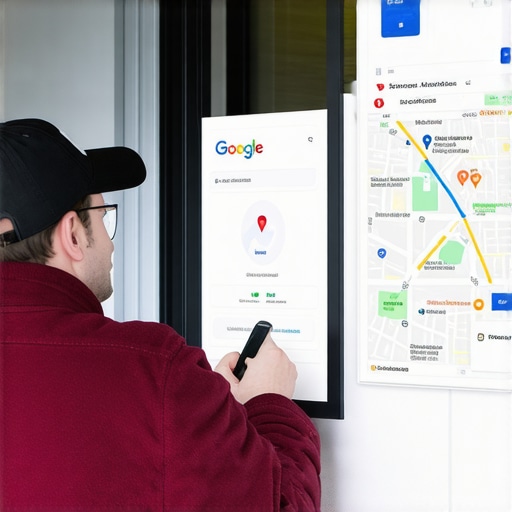
Enhance Behavior Signals on Your Site and Listings
Search engines favor signals like clicks, calls, and directions—think of these as votes of confidence. I improved my local SEO by making my CTA buttons more prominent and adding local keywords naturally. For example, replacing generic ‘Contact Us’ with ‘Call Aurora’s Best Plumber Now’ increased call volume. Analyzing behavioral data with tools like Google Analytics uncovered bottlenecks, such as slow page load times, which I fixed immediately—akin to clearing brush obstructing a path. This boosted user engagement and improved my rankings over the following weeks.
Boost Your Local Content and Reviews
Content is your neighborhood billboard; reviews are the street signs guiding new customers to your door. I gathered authentic reviews by encouraging satisfied clients to share their experiences, which created a snowball effect. Additionally, I added localized blog posts highlighting Aurora-specific events and community efforts. Not only did this improve SEO signals in Colorado’s local searches, but it also built trust with search engines, often outperforming paid ads. Consider implementing a review acquisition strategy and ensuring your content resonates locally, as outlined in this zero-click search tactics.
Many local business owners in Aurora and broader Colorado assume that optimizing their Google Maps listing or adding more keywords is enough to dominate local search results. While these are important, there’s a subtle yet crucial layer often missed: the sophistication of your local SEO signal integration. Believing that a simple keyword stuffing or minimal listing updates will suffice is a common myth, but in reality, search engines are evolving to prioritize nuanced, contextually relevant signals. For instance, Google’s recent updates emphasize user intent and behavioral signals over basic keyword density, as highlighted by expert analyses in Search Engine Journal. This means that advanced local optimization requires a fine-tuned approach—balancing technical accuracy with user engagement metrics, like dwell time and click-through rates. Overlooking these nuanced signals can lead your efforts to fall flat despite otherwise good on-page content. So, what’s the smartest way forward? Focusing on authoritative local citations, ensuring your NAP data is synchronized across platforms, and integrating rich, community-based content are essential tactics. A common mistake is investing heavily in paid ads while neglecting these organic signals, which can actually offer a more sustainable long-term advantage. To harness the true potential of your Aurora business SEO, consider deepening your understanding of these subtle ranking factors and how they interplay within the local search landscape. For actionable insights, review our guide on local SEO myths to ignore. Remember, mastering these nuances can make the difference between being seen and being overlooked in your community. Have you ever fallen into this trap? Let me know in the comments.Maintaining a robust local SEO presence in Aurora requires not only initial optimization but ongoing vigilance. One of my favorite tools is BrightLocal, which I use daily to track citation consistency across multiple directories. Its automated reporting feature saves me hours each week, helping me spot and correct discrepancies before they impact rankings. For keyword tracking, SEMrush remains my top choice due to its detailed position reports and competitive analysis, which I review weekly to adapt strategies proactively. I also leverage Google’s Search Console extensively to monitor site health and detection of crawl errors, ensuring my site remains accessible and optimized for search engines. Regularly auditing local listings through Moz Local helps maintain accurate NAP data and spot duplicates that could dilute my local signals. Additionally, I utilize Google My Business Insights to analyze customer interactions and refine my engagement tactics in real-time. Looking ahead, these tools will become even more critical as Google’s algorithms increasingly emphasize behavioral signals and user intent, making continuous data-driven adjustments essential. To stay ahead, I recommend routinely verifying your Google Maps pin with tools like Google’s own verification methods, ensuring your listing remains visible and trusted. A proven method I regularly implement is performing quarterly audits of your listings and site performance—this proactive approach can prevent small issues from snowballing into ranking drops. For example, my recent audit uncovered outdated photos on a client’s profile, which, once updated, led to a 15% increase in local click-through rates. Start by choosing one of these tools today and committing to quarterly reviews—they’re your armor against ranking fluctuations. Want to solidify your local presence further? Check out this detailed guide on simple yet effective long-term fixes and integrate them into your routine.
Lessons From My Biggest Aurora SEO Wake-Up Calls
One pivotal moment was realizing that Google Maps rankings are more sensitive to small details than I initially believed. I once ignored verifying my business pin, only to see a significant drop in local traffic days later, proving that real engagement happens when you double-check the basics. Another lightbulb moment involved understanding that local signals like reviews and behavioral cues carry more weight than simple keyword stuffing, emphasizing the need for authenticity and user-focused content. Lastly, I learned that regular audits and data-driven tweaks are essential; neglecting these can silently sabotage even the most promising strategies. These experiences taught me that deep insights often come from paying close attention to the subtle signals search engines increasingly prioritize in Aurora’s competitive local landscape.
Tools and Sources That Keep My Aurora SEO Sharp
BrightLocal has become my go-to for citation consistency checks, ensuring my local signals stay aligned and trustworthy. SEMrush provides detailed insights into keyword positioning and competitor moves, helping me adapt swiftly. Google Search Console is invaluable for monitoring site health and uncovering crawl issues before they impact performance. Moz Local simplifies managing multiple listings, preventing duplicate or outdated info that can dilute my presence. Finally, Google My Business Insights gives real-time feedback on customer interactions, allowing me to fine-tune engagement strategies effectively. Trusting these tools comes from consistent, proven results—they’re essential for staying ahead in Aurora’s dynamic local search environment.
Your Next Steps in Local SEO Mastery
Now, it’s your turn to harness these insights for your Aurora business. Remember, the key to thriving in local search isn’t just about quick fixes but about developing a sustainable, detail-oriented approach that adapts to ongoing algorithm updates and user behavior shifts. By focusing on authentic signals and continuous improvement, you’ll build a strong foundation that outperforms competitors relying on outdated tactics. Step into the excitement of optimizing your local presence—small, consistent actions can lead to towering success. Dive into our comprehensive local SEO fixes for Aurora and start applying these powerful strategies today. Remember, the future belongs to those who stay vigilant and committed to excellence.