
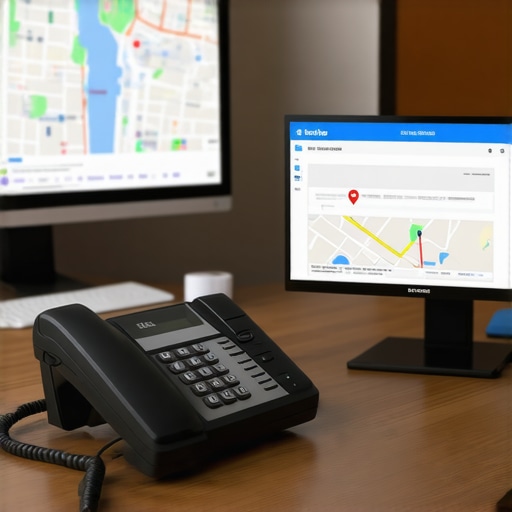
I remember the exact moment I realized something was seriously wrong. One busy morning, my phone sat silent—no rings, no calls, just an eerie quiet that was almost freakier than an empty street at dawn. Turns out, a recent Google Maps update had quietly buried my business listing, and I was oblivious to the fact that my phone was about to become invisible to local customers. That lightbulb moment made me rethink everything I knew about local SEO and map rankings.
The Urgency of Staying Visible in Aurora
If you’re like me, your phone is your lifeline to customers. When the map update rolled out, I wasn’t prepared. My business’s visibility took a nosedive overnight—a common nightmare for many local shop owners. It’s not just about missed calls; it’s about losing trust, revenue, and your hard-earned reputation. Being visible on Google Maps and local search isn’t optional anymore—it’s the difference between thriving and just surviving. According to Moz, 80% of local searches lead to an offline purchase, highlighting just how critical visibility is for small businesses.
Have You Faced This Problem?
Perhaps you’ve noticed your business isn’t showing up where it used to, or your call volume has sharply dropped since the last map update. Maybe your main rival’s shop now dominates local searches, and you’re left wondering what changed. Believe me, I’ve been there, and I know how frustrating it can be to feel invisible just when you need customers the most.
Early on, I made the mistake of thinking that simply verifying my listing was enough. I didn’t realize that the real issue was hidden deep in Google’s algorithm shifts and the way the map’s ranking signals changed post-update. Spending countless hours chasing generic fixes without understanding the core mechanics only delayed my recovery. That’s why I want to share what finally worked for me—and what can work for you too. Want to learn how to reclaim your map rankings? Check out this step-by-step guide for fixing map pin visibility issues.
Claim and Verify Your Listing Immediately
My first move was to ensure my business was officially claimed and verified on Google Maps. This step is crucial because unverified listings can get shadowbanned or buried after updates. I logged into Google My Business, followed the verification prompts—often a postcard with a code—and confirmed my ownership. Without this, all subsequent efforts are futile. For a detailed walkthrough, see this step-by-step guide.
Optimize Your NAP Consistency
Consistency of your Name, Address, and Phone Number (NAP) across all platforms is non-negotiable. I audited my listings on directories, social media, and my website, correcting any discrepancies. Inconsistent NAP signals can confuse Google, causing your ranking to drop. Think of your NAP as your business’s ID badge—if it’s mismatched, Google won’t recognize your badge as legit. Use tools like Moz Local or BrightLocal to streamline this process. For more advanced NAP strategies, check this inspection guide.
Build Local Citations with Purpose
Registering your business on reputable local directories increases authority signals. I prioritized quality over quantity, submitting my info to top-tier sites like Yelp, Bing Places, and local chambers of commerce. Each citation acts as a vote of trust, boosting my visibility. But beware of dirty data; duplicate or outdated info hurts your rankings. I used citations clean-up tools and verified every entry. For a comprehensive strategy, see this citation-building tactics.
Leverage Google Posts and Local Content
Regular, relevant content kept my profile active and signals to Google that my business is engaged. I used Google Posts to announce promotions, events, and updates specific to Aurora. Incorporating keywords natural to my locale, like “Aurora plumbing services,” I increased my chances of appearing in local searches. Remember, fresh content is a trust signal—neglecting it invites ranking decline. To maximize impact, check out this content optimization guide.
Solicit and Manage Customer Reviews
Reviews are social proof that influence local rankings and customer decisions. I encouraged satisfied clients to leave reviews via follow-up emails, offering simple instructions. Responding to reviews, both positive and negative, fostered engagement and showed Google activity. Be genuine and avoid fake reviews—that can backfire and harm your credibility. For effective review strategies, see this review management tactics.
Engage with Local Keywords and Schema Markup
Embedding geo-targeted keywords into your website’s meta tags, descriptions, and content helped Google recognize your local relevance. I also implemented schema markup to highlight my Aurora location explicitly, enhancing rich snippets in search results. This technical step signals to Google that your business is a local entity, improving map rankings. If you’re unsure how to implement schema, this technical checklist can assist.
Monitor and Adjust Your Strategy Regularly
SEO isn’t a one-time task. I set up Google Alerts and used tools like BrightLocal to track my rankings and reviews actively. When I noticed a dip after the latest map algorithm update, I revisited my profile, corrected inconsistencies, and pushed new content. Adjusting swiftly kept me ahead of the competition. To streamline your monitoring, review this tracking system. Keep in mind, local SEO demands persistence, not perfection.
Many local businesses in Aurora and broader Colorado often fall into the trap of oversimplifying SEO, believing that basic strategies like claiming their Google My Business listing and piling on citations are enough. While these are foundational, there’s a deeper layer of nuanced factors that significantly influence rankings—and understanding these can make all the difference. One common myth is that Google Maps ranking is solely about backlinks or reviews. In reality, advanced signals like schema markup, user engagement metrics, and AI-driven content relevance are reshaping local SEO. For example, incorrectly implementing schema can mislead search engines, resulting in lost visibility despite good content. A frequent mistake is neglecting the evolving role of AI in local search; Google’s algorithm now favors content that demonstrates expertise, authority, and trustworthiness, especially as outlined in Search Engine Journal’s recent analysis. It’s not just about optimizing for the search engine but also for the user experience, which includes ensuring your NAP data is impeccably consistent and your content addresses specific local intent. Moreover, many overlook the impact of voice search optimization—especially relevant in Aurora, where mobile and voice queries are on the rise. Incorporating natural language snippets and FAQ sections tailored to local questions can provide a competitive edge. So, what’s a nuanced approach for intensive local SEO in Aurora? Focus on building your local authority moat through strategic schema implementation, optimizing for voice search, and continually auditing your AI-related signals like content freshness and relevance. These advanced practices help prevent being overshadowed by big brands or AI content farms. I’ve seen many small businesses cut costs on technical SEO and schema, only to realize later that they missed out on significant traffic opportunities. For comprehensive guidance on building this sophisticated local SEO ecosystem, check out this detailed guide on how to build a Colorado local SEO authority moat.
Maintaining your local SEO success in Aurora requires more than just initial setup; it calls for deliberate action and the right toolkit. Over the years, I’ve refined my system, combining software and methods that deliver consistent results. One essential tool I rely on is BrightLocal, which I use not only for tracking my rankings but also for auditing citation consistency and reputation management. Its detailed reports help me identify dips in performance early, so I can respond proactively before rankings drop further. Additionally, Google Analytics remains invaluable for understanding user behavior on my website, uncovering how local visitors are engaging with my content and whether my local signals are resonating. To streamline content updates, I employ SEMrush, which offers comprehensive keyword tracking and competitive insights tailored to Aurora’s market. These insights inform my content refresh strategies, ensuring I stay ahead of algorithm shifts. Looking forward, I believe the trend toward AI-driven insights and automation will intensify, allowing for even more precise adjustments. To stay ahead, small businesses should consider integrating AI-powered tools like Surfer SEO to optimize content for local intent naturally. Want to keep your SEO efforts sustainable? Regular audits are crucial. I recommend scheduling bi-weekly reviews of your citation data, NAP consistency, and local keyword rankings. This way, you can catch anomalies and correct course swiftly, which is critical given how rapidly Google updates its algorithms. For an in-depth guide on enhancing your local SEO stability, check this comprehensive strategy. Ultimately, combining consistent monitoring with the right tools creates a resilient system that not only sustains rankings but also adapts to new algorithm updates and local market shifts. I encourage you to try consolidating your tracking and audit routines with tools like BrightLocal or SEMrush, to quantify progress and identify areas needing attention. Staying proactive ensures your Aurora business remains visible and competitive in a crowded local landscape.
Early setbacks in Aurora local SEO taught me that even smart strategies can falter without nuanced understanding. One lightbulb moment was realizing that Google’s algorithm rewards not just basic claims but sophisticated schema markup and voice search optimization—things I initially overlooked. That insight pushed me to dig deeper, verifying technical signals and harnessing AI-driven tools to stay ahead. Sometimes, the biggest breakthrough is recognizing what isn’t obvious—like the power of user engagement metrics or local content personalization—which can dramatically boost your map rankings and customer trust. Embracing continuous learning and adaptation has been key; SEO isn’t static, especially in a dynamic market like Aurora. Being open to reevaluating your strategies ensures resilience against unforeseen updates and shifts in local search patterns. Remember, every mistake is an opportunity to refine your approach, turning challenges into competitive advantages in Aurora’s thriving local landscape.