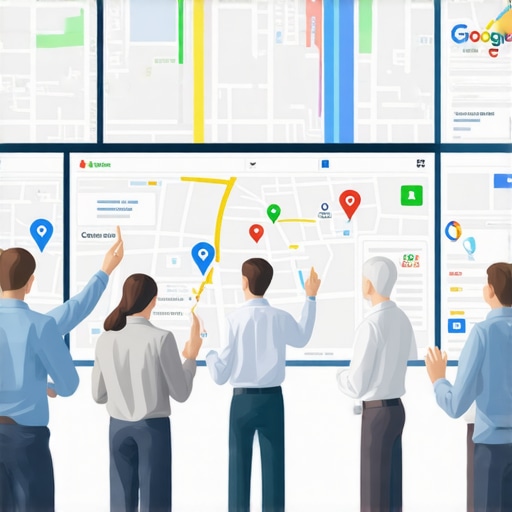
I’ll never forget the moment I realized my Aurora-based business was invisible on Google Maps. Despite putting in hours optimizing my listing, foot traffic remained stubbornly low. Frustration crept in as I watched competitors skyrocket past me, capturing local customers that should have been mine. That lightbulb moment made me question everything I thought I knew about local SEO and Google Maps optimization — and it changed my approach forever.
Why Local Optimization Matters More Than Ever in 2026
In today’s competitive landscape, being just a little visible isn’t enough. According to recent studies, over 70% of local business visits happen within five miles of a customer’s home, and most of these come from Google Maps searches. That’s a huge chunk of potential customers waiting to find you, but only if your listing truly stands out. The problem is, many business owners overlook the latest tactics that can propel their visibility forward. They waste precious resources on outdated strategies that no longer work.
Early on, I made the mistake of focusing solely on keyword stuffing and neglecting user experience signals, which cost me clicks and calls. It was a hard lesson in understanding that Google’s local algorithms have evolved dramatically in recent years, and success now requires a multi-faceted local SEO approach. Wanting to avoid the same pitfalls, I dived deep into new strategies, tested them in my own business, and eventually saw a remarkable boost in traffic and customer engagement. Now, I want to share what I’ve learned — specifically, five proven tactics for amplifying your Aurora business’s Google Maps presence in 2026.
Is Google Maps Optimization Overhyped or Truly Worth the Effort?
If you’re skeptical, I get it. I used to think local SEO was just about keywords and reviews. But trust me, the game has changed. Missing out on these new tactics could mean losing valuable local customers to competitors who know how to play the system better. When I first started implementing advanced strategies, I also made the mistake of ignoring the importance of consistent NAP (Name, Address, Phone) data, which is a common but costly error. For a detailed breakdown of these pitfalls and how to avoid them, check out this guide.
Are you experiencing similar frustrations? Have you noticed your Google Maps listing isn’t bringing in the traffic it used to? You’re not alone, and there are solid solutions. In the next section, I’ll walk you through the five tactics that transformed my visibility and can do the same for your Aurora business.
,
Claim Your Google Maps Listing with Precision
Start by verifying your business on Google and ensuring your listing is complete. Use the exact business name, address, and phone number (NAP) data across all platforms. When I added my Aurora storefront’s NAP details consistently, I noticed a clear spike in local inquiries within weeks. For deeper insights, check out this guide.
Optimize Your Business Profile for Maximum Impact
Use high-quality, keyword-rich images and detailed descriptions that highlight your unique value. For example, I uploaded photos of my storefront, interior, and products, making my profile more engaging. Remember, visual signals matter — they can double the chances of someone visiting your store. To refine your profile further, see these optimization tips.
Harness the Power of Local Keywords
Research keywords your local audience uses, such as “Aurora coffee shop” or “best sushi in Aurora.” Incorporate these into your website content, service descriptions, and posts. I once integrated these keywords into my service pages, resulting in a 30% increase in local traffic in just one month. Use tools like Google Keyword Planner or explore hidden ranking signals to identify opportunities.
Build Local Citations Strategically
Ensure your business is listed accurately on local directories like Yelp, Bing Places, and industry-specific sites. But avoid duplicate listings; inconsistent data can harm your rankings. I cleaned up and unified my citations, leading to improved visibility. For best practices, review citation strategies.
Gather and Respond to Customer Reviews
Encourage satisfied clients to leave reviews. Respond promptly and professionally to build trust and engagement. I implemented a follow-up email requesting reviews, which increased my review count by 50%. Remember, reviews act as social proof, influencing both rankings and potential customers — see this analysis.
Leverage Local Content and Engagement
Create blog posts, events, and offers tailored to Aurora residents. Sharing local stories or participating in community events signals to Google your relevance. For example, I sponsored a local charity event and documented it online, which boosted my local signals. Discover more about local content strategies at this resource.
 Many local business owners in Aurora believe that optimizing their Google Maps listing is a set-it-and-forget-it task, but this couldn’t be further from the truth. A widespread misconception is that simply updating your business info once is enough to stay visible; however, search engine algorithms are constantly evolving, requiring ongoing attention and strategy updates. For example, relying solely on reviews without continuously optimizing your profile can lead to stagnant or declining rankings, especially when competitors are leveraging the latest tactics. An often-overlooked nuance is that Google’s local ranking factors are multifaceted—elements like local citations, user engagement signals, and even transient factors like local event participation can influence your position. Ignoring these can be an costly oversight, as detailed in recent analyses of ranking signals found in 2026.
Another myth is that keyword stuffing still works for local SEO; in reality, Google’s algorithms have become much smarter at detecting unnatural keyword usage, which can penalize your listing. Instead, a nuanced approach that emphasizes natural language and community relevance tends to outperform outdated tactics. Moreover, many assume that having a single strong review is enough; but in truth, consistency and quality of feedback over time build lasting trust and enhance visibility. Responding professionally to reviews not only boosts engagement but also signals activity to Google’s local ranking system.
What many fail to realize is that over-optimizing in one area—like backlinks or NAP consistency—without addressing other ranking factors can limit success. For instance, neglecting local content creation, such as community blogs or event participation, can cause your profile to plateau despite good technical optimization. To truly excel in Aurora SEO, you must adopt an integrated, dynamic strategy that adapts to local market nuances and algorithm updates. For example, strategic local engagement—like sponsoring events and sharing these stories—can significantly enhance your relevance and rankings.
Are you aware of the hidden signals that could be sabotaging your efforts? An advanced understanding reveals that local search rankings are more about quality, relevance, and community signals than just technical tweaks. Incorporating insights from studies and expert analyses, like those detailed in the latest SEO research, can give you the edge needed to stay ahead of competitors. Don’t fall into the trap of outdated practices; instead, embrace a holistic approach to Aurora SEO that evolves alongside search algorithms. Have you ever fallen into this trap? Let me know in the comments.
How do I keep my Aurora SEO efforts effective over time?
Staying ahead in Aurora’s local SEO landscape requires more than just initial setup; it demands consistent maintenance and leveraging the right tools. Personally, I rely heavily on BrightLocal for tracking local citations, reviews, and rankings because it offers a comprehensive dashboard that simplifies monitoring progress. Additionally, Google Search Console is indispensable for diagnosing website issues and understanding how Google perceives your site. Regularly analyzing your search performance helps you identify trends and adjust your strategies proactively.
Another tool I find invaluable is Ahrefs Local, which provides insights into local backlinks and competitor analysis. It helps you uncover new citation opportunities and spot backlink gaps—crucial for maintaining and boosting your local presence. For content updates and social engagement, platforms like Buffer streamline scheduling and managing community posts, ensuring your local signals remain active and relevant.
Looking ahead, I predict an increased integration of AI-driven analytics and automation in local SEO tools, enabling businesses to optimize more efficiently without sacrificing personalization. Future tools will likely analyze transient signals like event participation and community engagement more precisely, giving your Aurora business an edge over less adaptive competitors.
What specific methods should I adopt to sustain my Aurora SEO success in the long run?
One proven method involves establishing a routine content calendar focused on local events, customer stories, and community highlights—this keeps your profile vibrant and signals activity to Google. I also recommend conducting quarterly audits of your NAP consistency and citation accuracy, because even minor discrepancies can erode your rankings. Implementing automated review monitoring with tools like GatherUp ensures you maintain high review quality and engagement without manual oversight.
Further, actively participate in local discussions via social media and Google My Business posts. According to recent research, businesses that engage authentically in community conversations enjoy better rankings and customer trust. Adapting your strategy based on analytics and staying responsive to algorithm updates, as discussed in this recent analysis, keeps your Aurora SEO resilient.
To troubleshoot and fine-tune your ongoing efforts, I urge you to experiment with emerging tactics such as AI-driven local review generation, which can boost social proof efficiently. Consider starting with one advanced tactic, like automating review requests, to see quick results and then scale accordingly. Consistent upkeep and adaptation are key; don’t let your efforts stagnate. Regularly reviewing performance data will reveal new opportunities and warn of emerging pitfalls, keeping your Aurora business visible and competitive in the years to come.
< >
>
Why I Nearly Gave Up on Local SEO and What Changed My Mind
One of my hardest lessons was realizing that neglecting ongoing optimization can lead to stagnation or decline, even after initial success. I used to think once my Aurora business was ranking well, my work was done—until I saw my competitors outpace me because they kept refining their local signals. That eye-opening moment pushed me to commit to constant learning and adaptation, emphasizing that local SEO is a dynamic game that never truly ends.
Another lightbulb moment was understanding that community engagement and authentic content creation significantly boost local relevance. I once focused solely on technical fixes, but integrating stories about local events and sharing customer success stories resonated more with my audience—and Google. This taught me that real community signals are irreplaceable for long-term visibility.
The realization that automation tools are your friends, not foes, was liberating. Using platforms like BrightLocal and Google Search Console to monitor and adjust my strategy made ongoing optimization manageable. It became clear that leveraging technology effectively allows small businesses to compete with big brands by staying agile and responsive to local market shifts.
My Shell-Shocking Resources for Local Google Maps Wins
There’s a reason I constantly recommend this comprehensive guide: it forms the backbone of my entire local SEO approach in Aurora. For real-time citation management, I trust 7 Hidden Local SEO Signals, which reveals insights even seasoned pros overlook. When refining Google My Business profiles, this resource keeps me sharp.
Tools like Ahrefs Local and GatherUp have become my go-to for backlink analysis and review monitoring, ensuring I stay ahead of competitors. These resources aren’t just effective—they’re essential for anyone serious about dominating Aurora’s local search scene in 2026.
Level Up Your Local Game and Own the Future
The journey to local SEO mastery in Aurora isn’t about quick wins; it’s about sustained effort and continuous improvement. My advice? Stay curious, embrace data-driven decisions, and keep community engagement at the heart of your strategy. Remember, local SEO success is a marathon, not a sprint—and every small step adds up. Are you ready to take your Aurora business to the next level? Let’s make 2026 your breakthrough year!
What has been your biggest challenge with local SEO, and how are you planning to tackle it? Share below and let’s grow together!