How to Actually Track Your Neighborhood Rankings Without the Headache
If you’re a local business owner or a marketing manager sitting at your desk, typing your main service into Google, and smiling because you see your business at the top – I have some bad news for you. You are likely falling victim to the “desk search” lie. In the world of google business profile seo, what you see from your office chair is almost never what your customers see three blocks away. This is the reality of local search in 2026: proximity isn’t just a factor; it’s a volatile, block-by-block battlefield.
I’m Kevin Pauls, and I’ve spent years as a Local SEO Consultant and Google Business Profile Product Expert helping businesses navigate these digital trenches. I’ve seen too many entrepreneurs get distracted by vanity metrics, thinking a single “average rank” number means they’re winning. It doesn’t. In an era where local pack ads have surged by a staggering 733% between late 2025 and early 2026, organic visibility is harder to achieve but more valuable than ever. If you aren’t tracking your rankings on a hyperlocal grid, you aren’t really tracking them at all.
Section 1: The Proximity Trap, Why Your Office Search is a Lie
The “Proximity Trap” is the most common reason local businesses fail to grow despite “good” SEO reports. Google’s primary goal is to provide the most relevant, local result to the user. Because of this, the algorithm is hyper-sensitive to the user’s physical coordinates. You might rank #1 at your front door, but as soon as a potential customer drives two blocks south, you could drop to #10, disappearing from the Map Pack entirely.
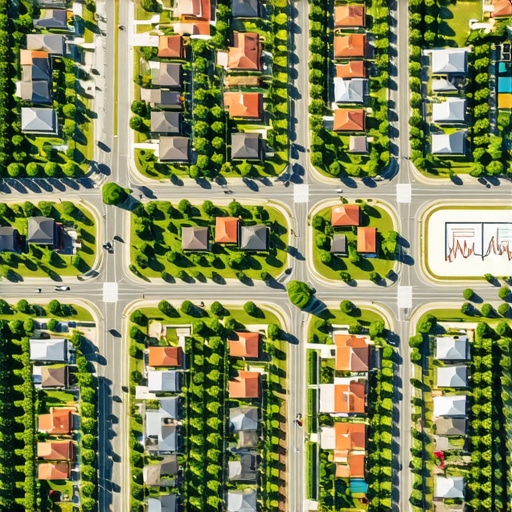
This happens because of the “centroid” effect and competitor density. In densely populated areas like Aurora or Denver, the “win zone” for a Google Business Profile (GBP) can be incredibly small. If you rely on a single search result from your own location, you’re looking through a pinhole. To truly understand your visibility, you need to see the “Map Grid.” This is a visualization of your rankings across a specific geographic area, typically represented by a series of data points over a map.
Stop trusting your phone’s search results. If you want to know the truth, you need to learn how to see your exact Google Maps rank without paying for bloated tools. Understanding the grid is the first step toward moving from “guessing” to “dominating.”
Section 2: Why Traditional Rank Tracking is Dead in 2026
For a decade, SEOs used list-based tracking. You’d get a report saying, “You rank #3 for ‘Plumber Denver’.” In 2026, that report is garbage. It’s a vanity metric that hides the “Red Spots” – the areas in your neighborhood where you are invisible to customers. Traditional tracking provides an average, but averages are dangerous. If you are #1 in one spot and #20 everywhere else, your average is #10. Does that help you run your business? No.
The massive 733% increase in local pack ads means that the organic “Top 3” spots are now competing for even less screen real estate. To survive, organic google business profile seo must be surgical. You need to see the “heat map” of your visibility. This is why using the right google maps rank tracker to see block-by-block data is essential. If you can’t see exactly where your “green zones” (Rank 1-3) end and your “red zones” (Rank 4+) begin, you can’t possibly know where to focus your optimization efforts.
Furthermore, Google’s latest safety reports indicate they blocked 292 million policy-violating reviews and removed 13 million fake profiles in the last year alone. This “clean-up” means that “clean” data and legitimate hyperlocal signals are now weighted more heavily. If your tracking doesn’t account for these shifts, you’re flying blind. You need google maps ranking improvements that are based on real-time grid data, not outdated list summaries.
Section 3: The 3 Pillars of Neighborhood Dominance
In 2026, “Hyperlocal Relevance” is the king of the algorithm. Google evaluates over 200 ranking signals, but they generally fall into three pillars: Proximity, Relevance, and Prominence. To rank higher on google maps, you must understand your grid and how these pillars interact within it.
1. Proximity: The Unfakeable Factor
You cannot “fake” your location anymore. Google is better than ever at identifying “ghost” offices and P.O. boxes. Proximity is the most volatile signal. If your business is located on the edge of a city, you will naturally struggle to rank in the center unless your Relevance and Prominence are off the charts. Tracking your grid helps you identify the physical limit of your reach, allowing you to stop fighting losing battles and start winning the neighborhoods where you actually have a chance.
2. Relevance: Aligning with Intent
Relevance is about how well your profile matches the user’s search query. In 2026, this means aligning your service pages and GBP updates with high-intent “near me” searches. If you’re a roofer in Aurora, your profile needs to scream “Aurora Roofing” through every photo, post, and review. If you find you are ghosting 2026 customers in specific neighborhoods, it’s often a relevance gap that can be fixed with localized content.
3. Prominence: The Authority Gap
Prominence is your digital “fame.” It’s how much Google trusts you based on your reviews, citations, and backlinks. You should leverage local seo ranking tools to outpace national brands that might have high authority but low local relevance. By using a grid tracker, you can see if a competitor is outranking you in a specific neighborhood and then use a how to spot exactly why your Aurora competitors outrank you on maps strategy to dismantle their lead.
Section 4: Choosing the Right Local SEO Software
The market is flooded with tools, but most are just reskinned versions of the same old data. To truly master google business profile seo in a competitive market, you need a tool that was built for the 2026 landscape. Professional google maps seo tools are no longer optional for agencies or serious business owners; they are the baseline for entry.
While tools like Local Falcon or GBPPromote have been around, I consistently recommend SEO Viper Tools. Why? Because this google business profile audit tool reveals hidden visibility gaps that others miss. It provides a real-time grid visualization that doesn’t just show you a number; it shows you a map. When you can see that your ranking drops from #2 to #5 the moment you cross a specific highway, you have actionable intelligence. You can then tailor your real local SEO tactics for 2026 to target that specific geographic boundary.
Whether you are a solo plumber or a multi-location law firm, your software should allow you to:
- Run multi-keyword grid searches simultaneously.
- Compare your grid against your top 3 competitors.
- Track changes over time to see the impact of your optimization.
- Identify “Review Gaps” in specific neighborhoods.
Investing in SEO Viper Tools ensures you aren’t just guessing – you’re executing a data-driven strategy.
Section 5: Step-by-Step: How to Audit Your Neighborhood
Ready to see the truth? Follow these 7 local audit steps that actually bring more calls to your Colorado shop. Here is the condensed version for your first grid audit:
Step 1: Set Your Grid Parameters
Don’t try to track the whole state. Start with a 5×5 or 7×7 mile grid centered on your business location. Set the data points to be every half-mile or mile. This gives you a high-resolution look at your immediate “neighborhood war.”
Step 2: Identify Your “Dead Zones”
Look for the red spots on the map where your ranking is #4 or lower. In the Map Pack, being #4 is the same as being #100 – you’re effectively invisible. Mark these neighborhoods down. These are your target areas for the next 90 days.
Step 3: Analyze the “Top 3” in Those Zones
Who is winning where you are losing? Look at the businesses in the Top 3 of your dead zones. Do they have more reviews from people in that specific neighborhood? Do they have “service area” pages on their website dedicated to that suburb? This is how you steal the top spot from your competitors.
Section 6: Fixing the “Red Spots” on Your Map
Once you’ve identified where you’re losing, it’s time for google business profile optimization. You don’t just “do SEO” in a vacuum; you do it to solve specific geographic weaknesses.
Geo-Tagged Content: Start uploading photos to your GBP that were actually taken in those “red spot” neighborhoods. Google’s AI can read the metadata and the visual landmarks in photos to confirm you are active in those areas. This is a massive signal for hyperlocal relevance.
Service Area Strategy: If you are a service-based business, you need the service area strategy for capturing more leads across Colorado. Create dedicated landing pages on your website for the specific neighborhoods where your grid is red. Link to these pages from your GBP posts and ensure they contain local landmarks, street names, and neighborhood-specific testimonials.
Hyperlocal Reviews: Encourage customers from your “red zones” to mention their neighborhood by name in their reviews. A review that says “Great service in Seven Hills, Aurora” is worth ten reviews that just say “Great service.” This helps Google associate your business with that specific geographic coordinate, expanding your “green zone” on the grid.
Conclusion: Tracking is Only Half the Battle
The “Proximity Trap” is only a trap if you don’t know it exists. By shifting from traditional rank tracking to grid-based visualization, you gain a competitive advantage that 90% of your competitors are ignoring. You stop chasing “average” rankings and start dominating the specific blocks that drive your revenue.
But remember: tracking is only half the battle. Data without action is just a pretty map. Use the insights from your grid to refine your content, boost your prominence, and prove your relevance to Google’s algorithm. If you find yourself stuck on “Page 2” or buried under a sea of ads, it might be time to look into professional local seo services to help you break through the noise.
Take ten minutes today. Run a grid audit on your business. Find your red spots. And then, get to work turning them green. The neighborhood war is won one block at a time.